Packnorth Award 2026 – Nominees
The Packnorth Award 2026 nominees have now been selected.
The award ceremony will take place on September 30 at 1:00 PM on the Empack stage, where the winners in each category will be announced.
Category: Circular / Sustainable Packaging
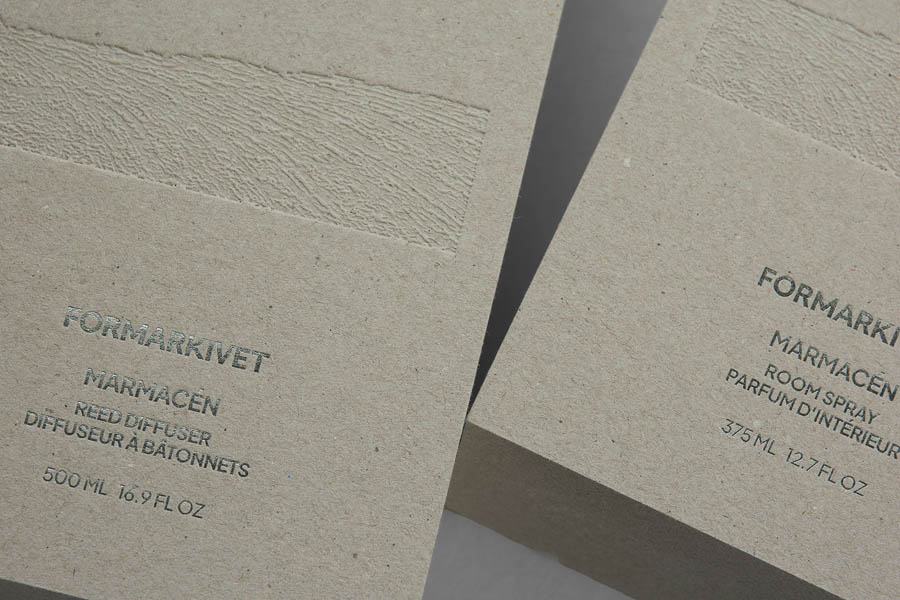
Packaging for Formarkivet’s Marmacén Home Scent Packaging
The packaging for Formarkivet’s Marmacén Home Scent Packaging is made from 100% recycled FSC-certified fibreboard without a paper covering, minimizing material use and environmental impact while maintaining the desired premium look. Multiply’s production technology enables sharply defined corners, while embossing and dark silver foil create a distinctive yet timeless appearance.
The insert is also made from recycled material and complements the design of the packaging. The packaging was developed as an integral part of the brand experience and is actively used in marketing rather than being treated simply as a cost. The product series and packaging were launched in 2025.
The packaging is recyclable through established paper and board recycling streams, and the limited amount of metal foil does not interfere with the recycling process, making the solution essentially 100% recyclable.
The jury’s statement: The packaging combines circular design, recyclable materials and resource-efficient construction with a clear premium feel. Its minimalist Scandinavian form communicates quality, care and exclusivity while also being designed for reuse. Although its understated expression somewhat weakens the connection to the fragrance experience, the solution demonstrates that sustainability, aesthetics and functionality can be successfully combined.
Company: Multiply Solutions Sweden AB
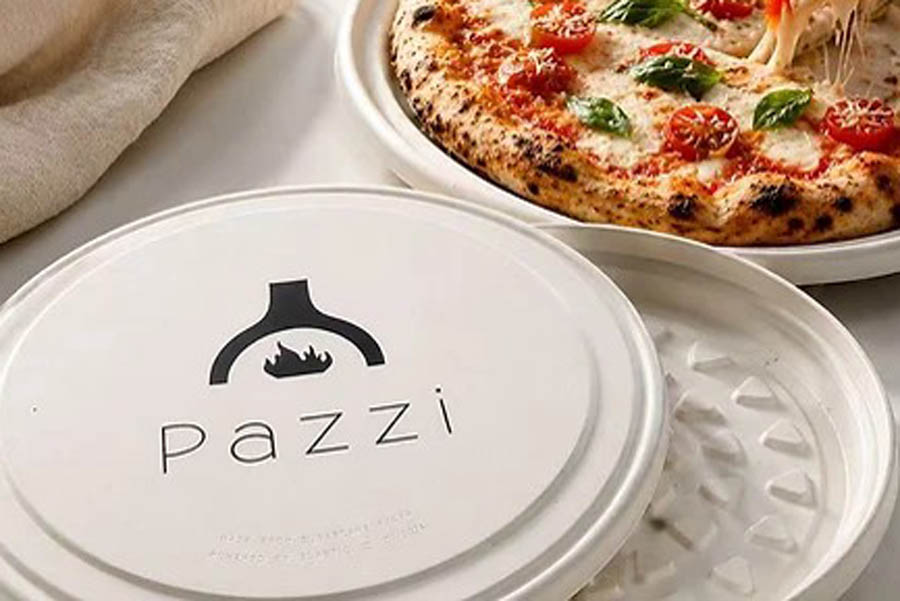
PFAS-Free Pizza Packaging Made from Bagasse
Blastiq’s round pizza box is a PFAS-free food packaging solution made from bagasse, a renewable plant fibre derived from sugarcane. To provide grease and moisture resistance, the company has developed its own PHA-based barrier coating to replace traditional PFAS solutions.
The result is packaging that offers the functionality of a conventional pizza box without harmful chemicals or microplastics, while being fully compostable.
The round shape is designed around the pizza itself, reducing material consumption and improving transportation and storage efficiency. The construction is made from bio-based materials and designed for easy recycling through paper recycling streams. For consumers, this means the packaging can be sorted as paper packaging after use.
The product was developed in response to the EU phase-out of PFAS in food packaging and is already being used by customers in the food industry.
The jury’s statement: An innovative and circular packaging solution that combines recyclability, functionality and attractive design. By using PFAS-free biomaterials, it addresses current sustainability challenges while improving the user experience. The round shape and well-considered construction can help reduce material consumption, while the solution stands out through strong differentiation, high quality and significant market potential.
Company: Blastiq AB
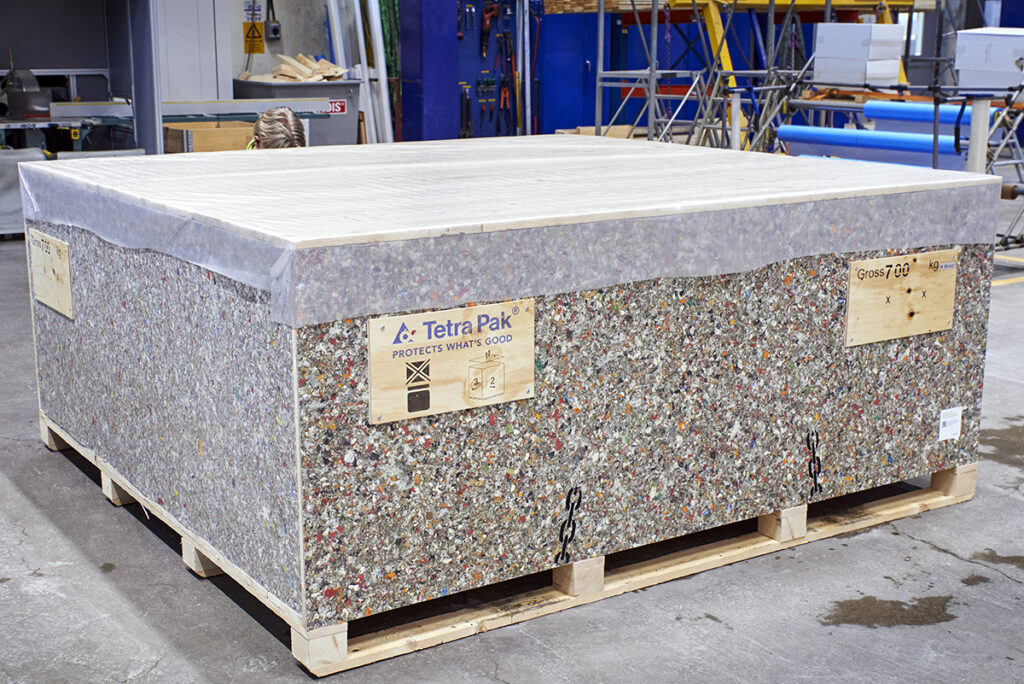
Transport Box Made from Recycled Beverage Cartons and Industrial Residual Materials
Tetra Pak, together with Nefab and Recoma, has developed a new industrial transport box that replaces traditional wooden packaging. The solution uses 6 mm Recoma boards made from 100% recycled materials, including beverage cartons and industrial residual materials, instead of 19 mm wood.
Despite its thinner construction, the packaging can withstand heavy transport loads ranging from 500 kg to 9 tonnes.
Following successful testing in 2025, the solution was fully implemented at Tetra Pak’s facility in Lund in 2026. In addition to reducing the use of virgin wood, the packaging has contributed to improved production efficiency and a lower climate impact.
The construction is easy to dismantle, facilitating material recycling. Production waste is returned directly to Recoma’s manufacturing process, and the company has also developed the capacity to collect and recycle used boards.
The project demonstrates how recycled materials can meet demanding industrial requirements while reducing both costs and environmental impact.
The jury’s statement: An inspiring example of how recycled materials can create real value. Innovative use of recycled polymers and liquid packaging board combines circular thinking with robustness, safety and efficiency. The solution demonstrates that sustainable development can meet demanding industrial requirements while already delivering tangible business benefits.
Company: Recoma AB
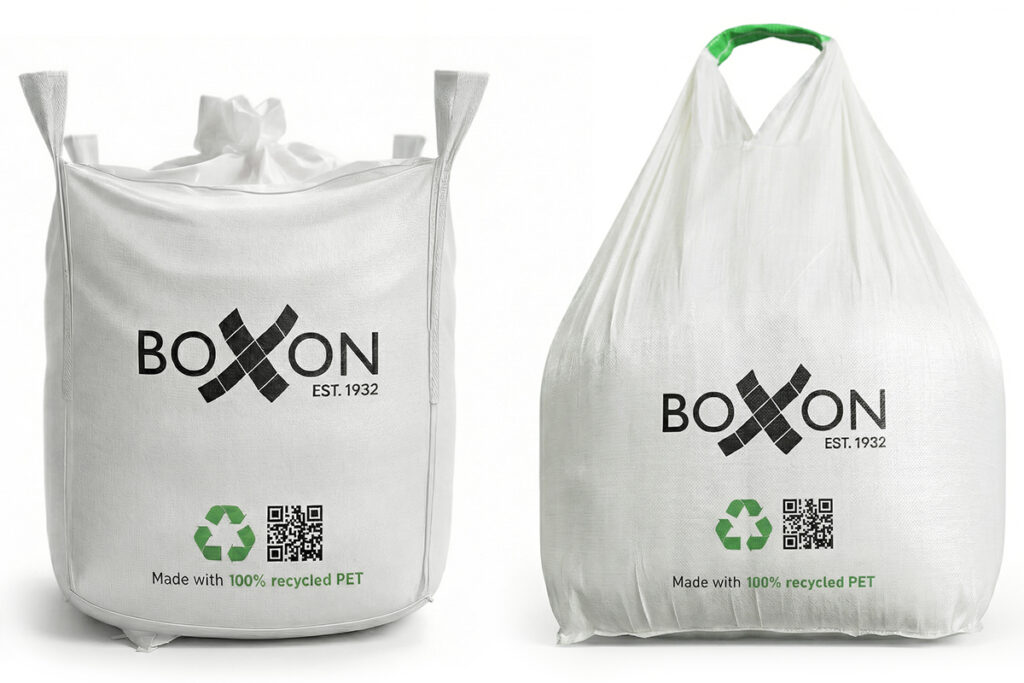
rPET Big Bag Combines Recycled Material with High Performance and Food-Contact Approval
Boxon’s new rPET Big Bag is a circular industrial packaging solution that combines recycled material from PET bottles with high performance and approval for direct food contact.
The bags are made from recycled PET bottles, helping companies reduce their environmental impact while meeting high standards for safety and quality.
Compared with conventional solutions made from virgin plastic, they offer up to a 50% lower carbon footprint, as well as improved UV resistance, abrasion resistance and dimensional stability during transport and handling. The material withstands temperatures from -20°C to +140°C and is suitable for food, chemicals and other demanding industrial applications.
Improved print quality also enables clearer labelling and better traceability in regulated supply chains.
The packaging is both reusable and recyclable, strengthening its contribution to a more circular economy.
The jury’s statement: A strong example of how circular material solutions can perform in demanding industrial applications. By controlling the origin of the raw material, recycled polymers are combined with high functionality, food safety and full traceability. The solution demonstrates that sustainability can be scaled without compromising performance, while achieving an impressive 50% reduction in carbon footprint.
Company: Boxon Group
Category: Food & Beverage Packaging
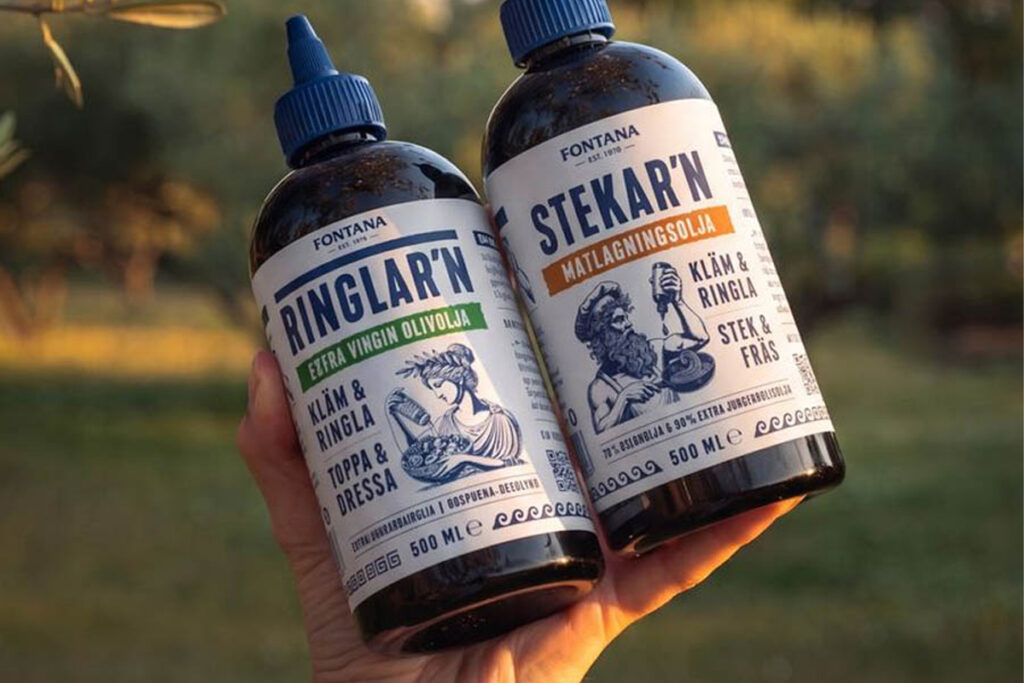
Ringlar’n Extra Virgin Olive Oil
Ringlar’n, launched together with Stekar’n one year ago, is a new packaging solution for 100% Greek extra virgin olive oil. The products form a kitchen duo in which the names, design and functionality clearly guide consumers towards the right use.
Ringlar’n is designed for salads, dressings, marinades and as a flavour enhancer, while Stekar’n is intended for frying and everyday cooking.
The packaging consists of a dark PET squeeze bottle that protects the oil from light while being lighter and more durable than glass. The smart squeeze function and precision nozzle provide better dosing control, reduce waste and make the product easier to use.
With a modern design inspired by Fontana’s Greek heritage, Ringlar’n combines functionality, sustainability and clear communication. The result is a user-friendly, waste-conscious packaging solution that addresses a specific consumer need and makes it easier to use olive oil more often in everyday life.
The jury’s statement: A well-considered, consumer-focused packaging solution that addresses a concrete everyday problem through improved dosing and reduced waste. The circular solution combines functionality, clear communication and an appealing unboxing experience. Its cohesive graphic expression and strong storytelling create a premium feel that sparks curiosity and strengthens the brand.
Company: Fontana Food
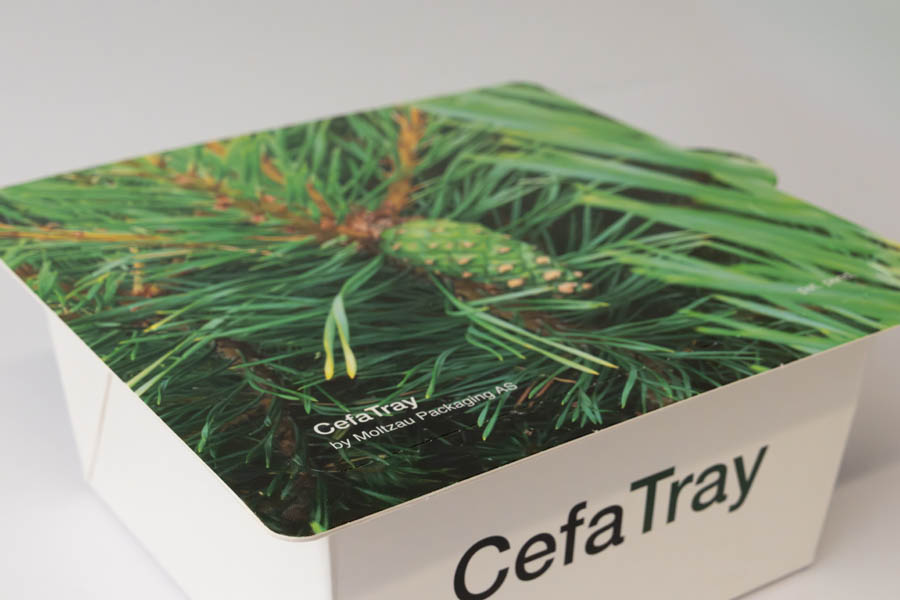
CefaTray – A Fibre-Based Food Tray with Performance Comparable to Plastic and Aluminium
CefaTray is a fibre-based food packaging solution from Moltzau Packaging, made from virgin wood fibre sourced from sustainably managed Nordic forests.
After several years of development, the solution was launched in 2025 through a pilot project with BAMA for ready-to-eat meals. Thanks to patented forming technology, CefaTray offers performance comparable to plastic and aluminium trays, including for moist and oily products.
The packaging is strong, stackable, food-safe and designed for recycling. It can reduce plastic use by up to 95% and is available in Green, MAP and Heat versions, adapted to different requirements for durability, protection and heating. The Heat version withstands oven temperatures of up to approximately 220°C.
CefaTray is suitable for a wide range of food products, from ready meals and salads to meat, fish and bakery products. Its flat transport format reduces storage requirements, transport volumes and emissions, while the large printable surface provides strong opportunities for brand communication.
To facilitate implementation, Moltzau Packaging offers complete machinery concepts that allow customers to assemble CefaTray directly within their own production facilities.
The jury’s statement: CefaTray is an impressive fibre-based innovation that challenges plastic’s traditional applications. With high functionality, a strong sustainability profile and smart design for recycling, logistics and food safety, the solution demonstrates significant market potential. An additional strength is the complete machinery concept, enabling customers to assemble CefaTray directly within their own production.
Transporting the trays flat also reduces storage requirements while lowering transport volumes and associated emissions.
Company: Moltzau Packaging
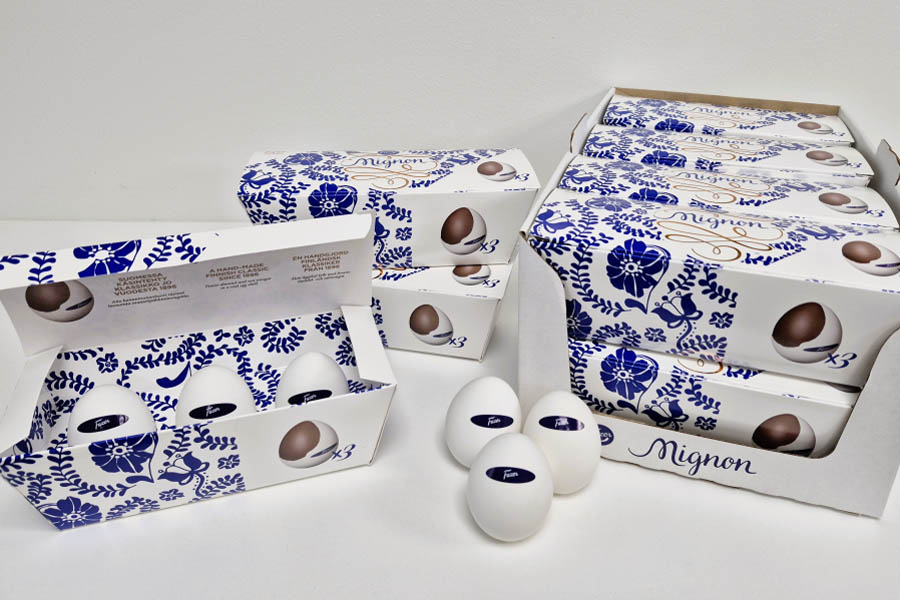
New Packaging Design for Mignon 3-Pack
Mignon 3-pack from Fazer has received a completely new packaging design developed by Pyroll Packaging Group. The classic product, manufactured since 1896 and still made by hand by filling real eggshells with almond and hazelnut nougat, requires a high level of product protection.
The new solution replaces the previous egg-carton-style packaging with an elegant premium box. A specially developed board insert holds and protects each egg in place while creating an attractive opening experience.
The redesign strengthens Mignon’s premium positioning, improves visibility on the shelf and makes the product more attractive as a gift. The packaging also provides space to highlight Mignon’s history and craftsmanship.
In addition to the design benefits, the new construction creates logistics advantages by allowing up to 21% more consumer packages per pallet. The packaging is made from board, is recyclable and combines tradition, innovation, product protection, sustainability and more efficient transport in a single solution.
The jury’s statement: A well-executed packaging solution that modernises a classic without losing its heritage. The design creates a clear premium feel while contributing to both product protection and efficient logistics. At the same time, the product’s unique added values can be communicated more effectively. The construction does, however, have some limitations from a user perspective.
Company: Pyroll Packaging Group, Finland
Category: E-commerce Packaging
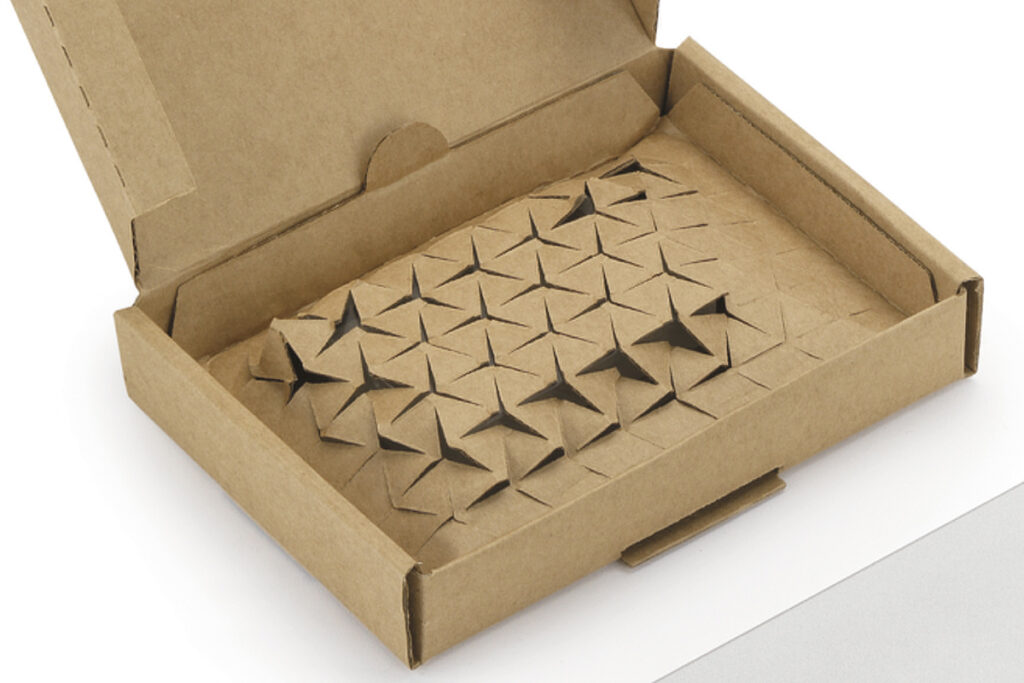
E-commerce Packaging with Integrated, Flexible Protection that Adapts to the Product
This smart e-commerce box provides additional protection through an integrated flexible paper insert that moulds itself around the product and holds it securely in place during transport.
The solution is entirely paper-based, simplifying the packing process while reducing the need for additional packaging and storage of protective materials. The box is particularly suitable for fragile products, electronics, technical components and other valuable items.
Rajapack offers the box in three sizes designed for small and medium-sized e-commerce products. The product is FSC-certified, made from 50% recycled material and fully recyclable.
The jury’s statement: A smart and scalable e-commerce solution that combines effective product protection, a monomaterial construction and a simplified packing process. The integrated cushioning and load securing reduce the need for additional packaging while creating logistical and environmental benefits. An attractive and flexible packaging solution with clear market potential.
Company: Rajapack
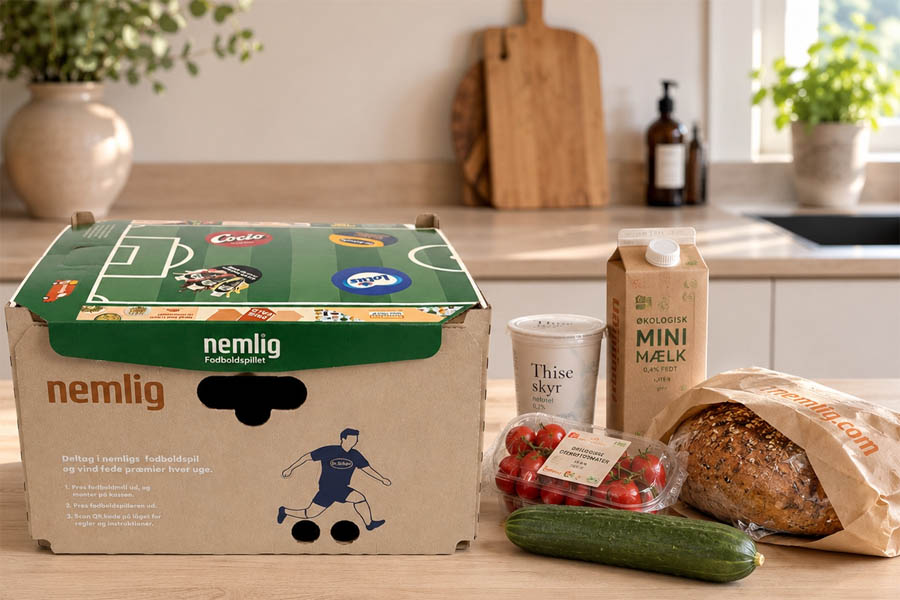
Packaging for a Local Football World Cup
In collaboration with Danish online grocery retailer Nemlig.com, Smurfit Westrock developed a special edition of its corrugated delivery box for the football World Cup.
The standard delivery box was transformed into an interactive football arena by printing a football pitch on the lid. Parts of the box could be punched out to create a goal and a player, with the player controlled by hand through specially designed holes. With a small ball, the box becomes a simple football game for the whole family.
Two boxes together form a complete pitch with goals at both ends for two-player games.
The concept demonstrates how packaging can gain added value through play, reuse and customer engagement. At the same time, the box retains its original function as a robust and efficient solution for grocery deliveries without requiring changes to the existing distribution system.
The jury’s statement: A creative and circular solution that gives the packaging a valuable second life and creates a positive customer experience. The idea has strong potential for visibility and engagement, particularly on social media. A smart initiative with a clear sustainability profile, although the visual execution could be further refined.
Company: Smurfit Westrock, Denmark
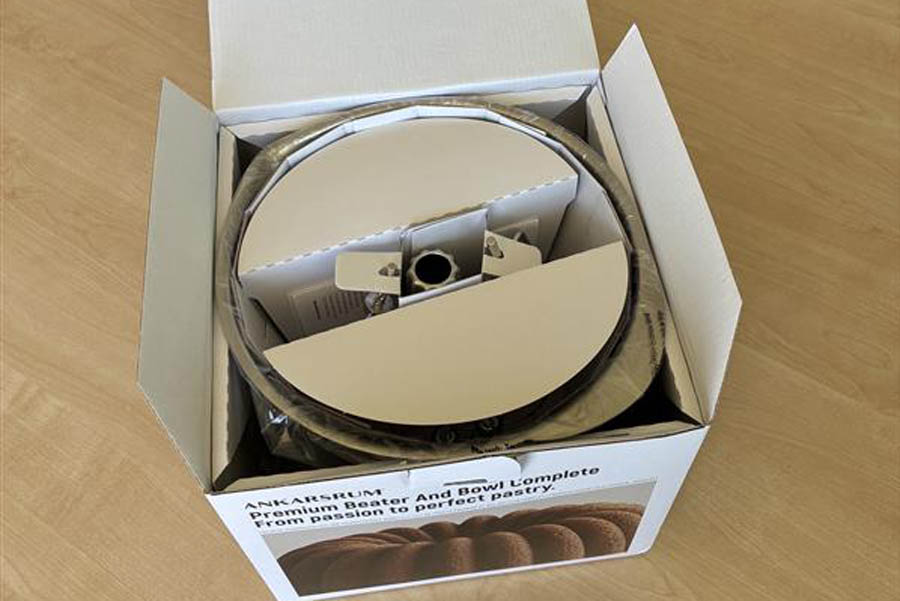
Maximising the Use of Available Space
Ankarsrum wanted to combine its mixing bowl and whisk set in a single package without increasing the packaging volume, while also protecting the bowl from damage.
Smurfit Westrock therefore developed a fibre-based insert system that makes use of the bowl’s existing internal volume. This turns previously unused space into functional packaging space while improving protection during e-commerce distribution.
The jury’s statement: A smart and resource-efficient solution that reduces empty space by making thoughtful use of the product’s own volume. The packaging combines functionality with an appealing expression and elegant product photography. A strong example of how design and material efficiency can work together.
Company: Smurfit Westrock, Sweden
Category: Luxury Packaging
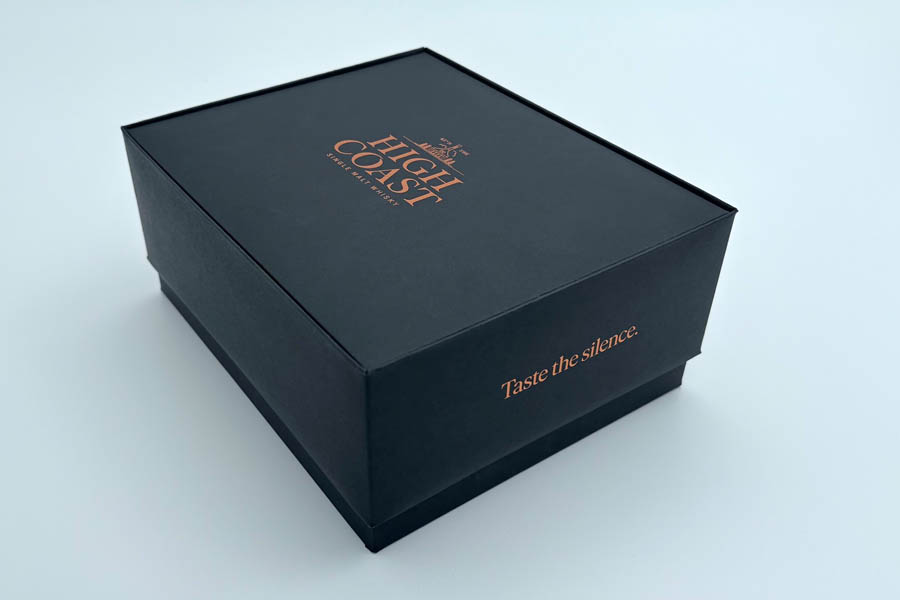
Smart Design with a Premium Look
Eco Rigid is a premium packaging solution that combines the exclusive feel of a traditional rigid box with the efficiency of a folding carton.
Its seamless construction, without visible joins or raw edges, creates an elegant appearance and a premium unboxing experience. Despite its robust and luxurious impression, the packaging is manufactured as a side-glued carton, making it more cost-effective than traditional rigid packaging.
The packaging is delivered flat, reducing transport volume, storage requirements and shipping costs while lowering the climate impact of logistics. Eco Rigid also requires less material than conventional rigid boxes, reducing resource consumption and the overall environmental footprint.
By combining exclusive design, efficient production and improved sustainability, the packaging offers an attractive alternative for brands seeking to combine premium appeal with smarter, more sustainable packaging solutions.
The jury’s statement: ECO RIGID demonstrates how premium packaging can be combined with material minimisation and resource efficiency. The elegant design, tactile surface and robust board construction create a luxurious feel, while recycled material and reduced transport volumes strengthen its sustainability profile. A convincing step towards the premium packaging solutions of the future.
Company: Nordic Carton
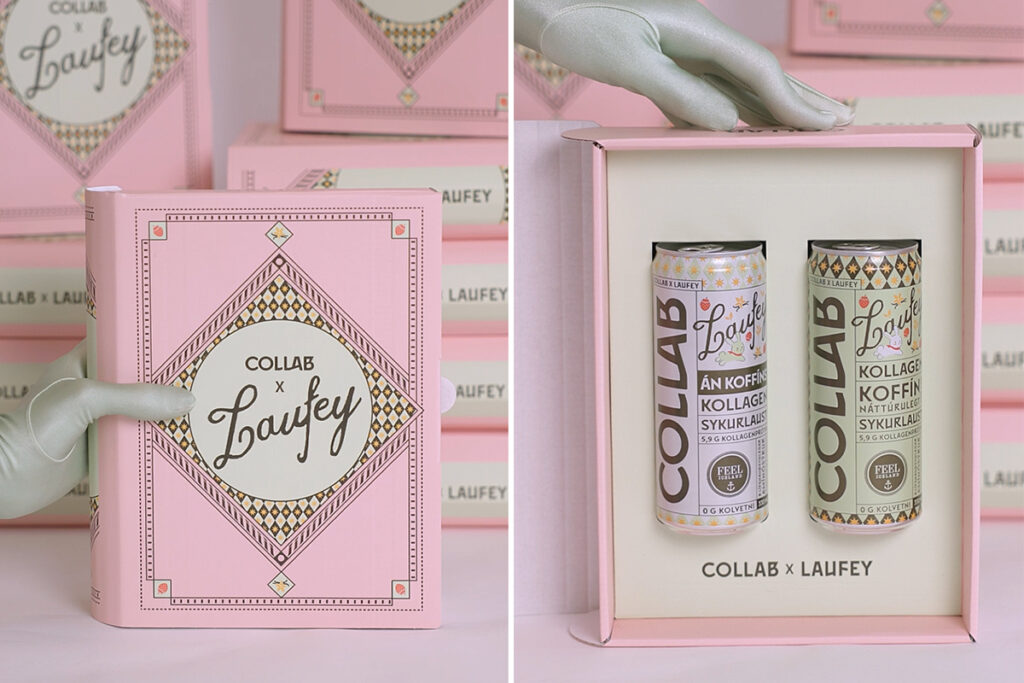
Luxury Packaging that Creates Clear Added Value
The exclusive packaging was developed for Icelandic Collab’s launch of two new flavours in collaboration with artist Laufey. The aim was to create premium packaging that both protects the product and enhances the brand experience.
The book-like construction, combined with a bespoke insert, presents the product in a thoughtful and visually appealing way. High-quality materials and exclusive finishes, including soft-touch treatment, contribute to a luxurious feel and clear premium positioning.
The packaging’s strong visual expression and high wow factor played an important role in the launch, creating a memorable unboxing experience. The entry demonstrates how packaging design can actively contribute to brand building by combining functionality, aesthetics and emotion in a solution that offers significantly more than product protection alone.
The jury’s statement: An exclusive and highly appealing packaging solution that builds anticipation, sparks curiosity and creates a strong unboxing experience. The carefully developed graphic expression connects elegantly with the product and strengthens the brand story. An innovative overall concept with a strong premium feel, although the book concept could have been developed further through additional storytelling.
Company: FrontPac
Category: Industrial Packaging
Industrial Transport Packaging with Walls Made from Recycled Beverage Cartons
Tetra Pak, together with NEFAB and RECOMA, has developed industrial transport packaging that replaces traditional wooden crates with boards made from recycled beverage cartons and industrial residual materials.
The solution can handle heavy loads of up to 9 tonnes and has undergone extensive testing to ensure functionality and durability. Following successful pilot tests, it was fully implemented at Tetra Pak’s facility in Lund in 2026.
The packaging reduces the use of virgin wood, lowers climate impact, improves production efficiency and contributes to lower costs. The project demonstrates that recycled materials can meet demanding industrial requirements while strengthening circularity.
The jury’s statement: A strong example of circular innovation in which waste is given a new life as visually appealing and functional construction boards. The solution combines sustainability with robustness, safety and efficiency while already demonstrating tangible business benefits in practical use.
Company: Recoma
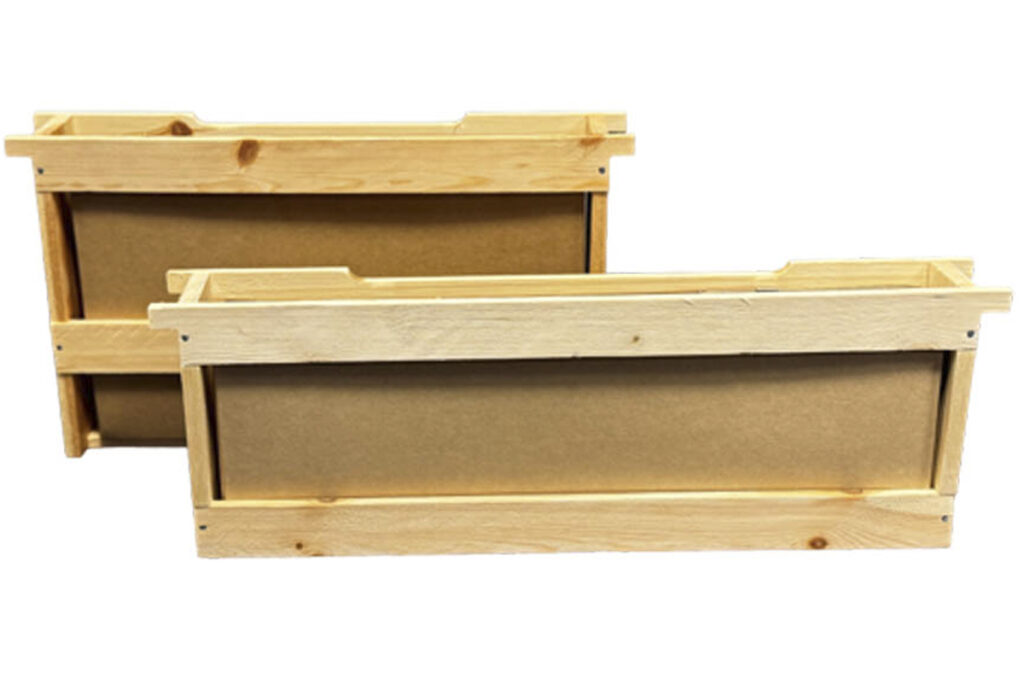
Combining Packaging Design with Practical Needs in Beekeeping
FeeBee and FeeDoo combine smart packaging design with practical requirements in beekeeping.
The solution consists of a durable wooden frame and a flat-packed insert made from solid board that is folded into shape during assembly. This reduces transport volume while enabling easy replacement and improved hygiene.
By separating the reusable load-bearing structure from the replaceable fibre-based component, the design reduces material consumption, limits the use of plastic and creates a more resource-efficient system throughout its lifecycle.
The jury’s statement: A highly innovative and creative solution that uses packaging in a new and intelligent way. The design starts from a clear user need and translates it into a thoughtful, functional and practical solution. A strong example of how innovation can create genuine added value for the user.
Company: Smurfit Westrock, Sweden
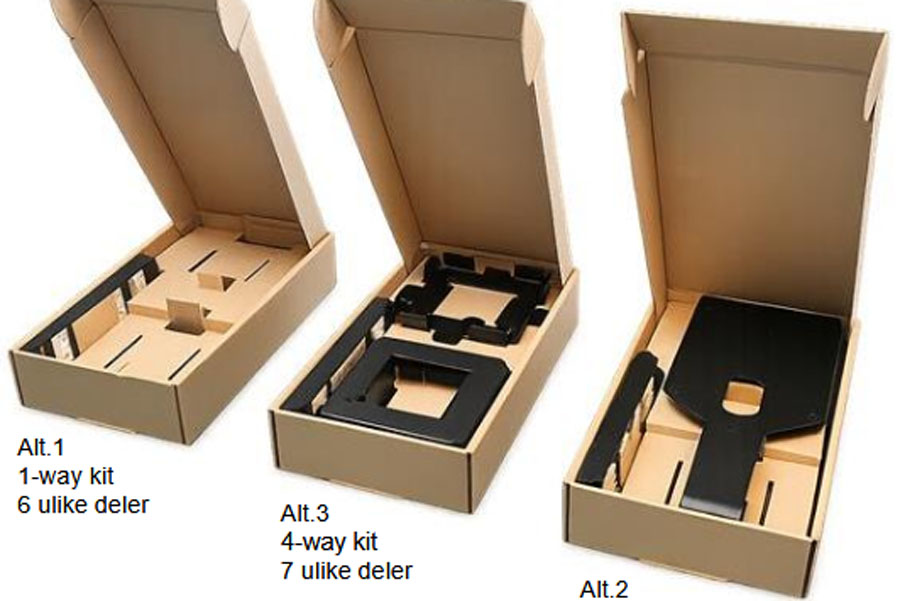
Three Product Kits Packed in One Box with an Insert
The packaging is a newly developed and standardised solution designed to pack three different product kits using just one box and one insert.
The universal construction reduces the need for multiple packaging variants, resulting in lower production costs, simpler administration and more efficient inventory management, logistics and packing processes.
Standardisation also reduces the required storage space from three pallet spaces to one, lowering both transport and handling costs.
The robust corrugated board construction provides good product protection while the material is recyclable and supports more sustainable packaging choices. The result is a smart, cost-effective and resource-efficient solution with clear operational and environmental benefits.
The jury’s statement: A smart and circular solution that impressively combines standardisation and differentiation. Thoughtful structural design delivers significant environmental and logistical benefits through more efficient resource use and simplified systems. A strong example of sustainable innovation with clear practical value.
Company: Glomma Papp, Norway
Category: Graphic Packaging Design
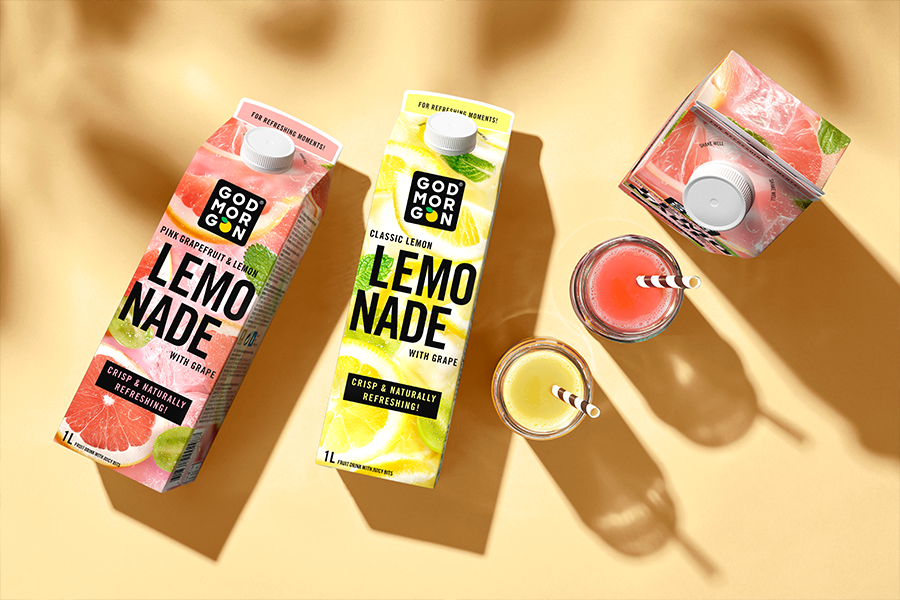
God Morgon Lemonade
God Morgon demonstrates how an established breakfast brand can enter the lemonade market without losing its identity.
By retaining the familiar carton format while modernising the design, the brand creates a clear and attractive position on the shelf. Large, prominent typography and generous fruit imagery create a fresh, refreshing and contemporary expression, while colour coding makes the different flavours easy to distinguish.
The connection to the brand is maintained through the familiar God Morgon® logo.
The packaging expands the brand’s role from the breakfast table to more occasions throughout the day. Its FSC-certified board and clear recycling information further strengthen the overall concept by combining attractive design with sustainability considerations.
The jury’s statement: A clear and modern package with strong shelf presence and effective colour differentiation. The large fruit imagery and improved typography make the product more appetising and easier to understand. Although somewhat conventional in expression, the design creates energy, clarity and increased consumer appeal.
Company: Pond Design, Sweden
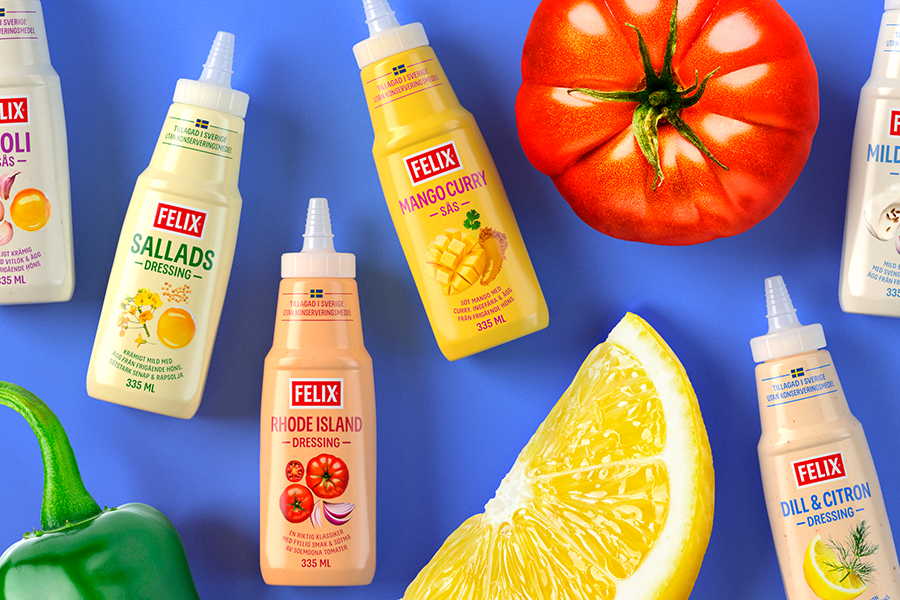
Felix Sauces and Dressings
Felix demonstrates how an established brand can regain relevance through a carefully considered packaging refresh.
With a new bottle design and modern visual identity, the sauces and dressings range has gained a clearer premium expression that strengthens the brand while improving the user experience.
The development was based on extensive consumer insights and primarily targeted households that buy ready-made sauces, with the aim of attracting new customers while strengthening loyalty among existing consumers.
The transparent bottle, combined with appealing ingredient photography, highlights taste, quality and freshness while challenging the perception that shelf-stable sauces are less attractive than refrigerated alternatives.
The new design modernises the brand without sacrificing recognition. The distinctive bottle shape and updated visual expression improve shelf visibility, spark curiosity and strengthen the product’s premium positioning.
The result is packaging that consumers are happy to place on the dinner table and that supports a higher perceived value.
By involving production and technology early in the development process, technical limitations were turned into opportunities. The final packaging is both attractive and functional, works efficiently in an automated production environment and strengthens Felix’s market position while contributing to increased sales and brand relevance.
The jury’s statement: A strong example of how strategic packaging design can create tangible business value. The carefully considered design upgrade has strengthened the product’s appeal, with colour, typography, illustrations and form working together to create an appetising and high-quality overall impression. A functional and user-friendly package with impressive results and a clear gourmet feel.
Company: Silver, Sweden
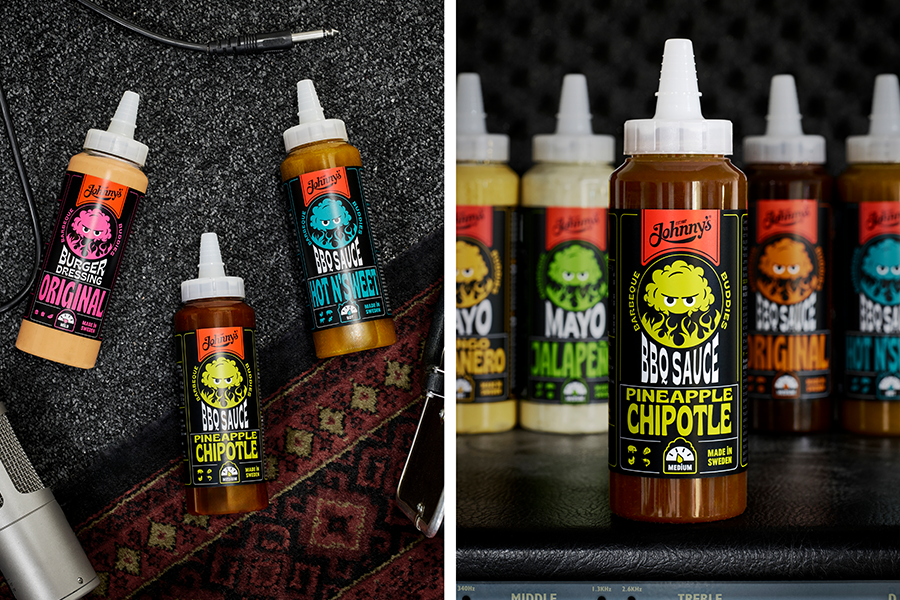
Johnny’s Barbeque Buddies
Johnny’s Barbeque Buddies demonstrates how a strong brand can expand beyond its core category without losing its identity.
Building on Johnny’s well-known, humorous and self-deprecating personality, the brand has created a clear and engaging concept for the barbecue market. The range of BBQ sauces, rubs and crisps combines playful communication with a strong visual identity firmly rooted in the brand’s DNA.
In a competitive market, the concept has succeeded in standing out, attracting its target audience and strengthening Johnny’s position beyond the mustard aisle.
The result is a creative and well-executed brand extension that has become one of Kavli’s most successful product launches.
The jury’s statement: A bold, modern and energetic design concept that builds on the brand’s strong personality. Clear colour differentiation and strong shelf impact make the products easy to find and understand. The typography is of a high standard, although some colour choices reduce appetite appeal and feel somewhat artificial.
Company: Silver, Sweden
Luxury Packaging that Creates Clear Added Value
The exclusive packaging was developed for Icelandic Collab’s launch of two new flavours in collaboration with artist Laufey. The aim was to create premium packaging that both protects the product and enhances the brand experience.
The book-like construction, combined with a bespoke insert, presents the product in a thoughtful and visually appealing way. High-quality materials and exclusive finishes, including soft-touch treatment, contribute to a luxurious feel and clear premium positioning.
The packaging’s strong visual expression and high wow factor played an important role in the launch, creating a memorable unboxing experience. The entry demonstrates how packaging design can actively contribute to brand building by combining functionality, aesthetics and emotion in a solution that offers significantly more than product protection alone.
The jury’s statement: An exclusive and highly appealing packaging solution that builds anticipation, sparks curiosity and creates a strong unboxing experience. The carefully developed graphic expression connects elegantly with the product and strengthens the brand story. An innovative overall concept with a strong premium feel, although the book concept could have been developed further through additional storytelling.
Company: FrontPac
Category: Smart & Intelligent Packaging
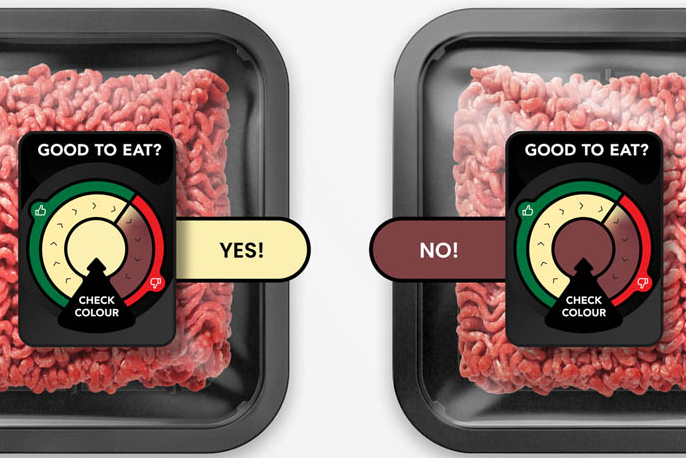
Reducing Food Waste with Innoscentia’s Smart Solution
Innoscentia addresses one of Europe’s major sustainability challenges: food waste. Around 58 million tonnes of food are discarded in the EU every year, often because best-before dates are set conservatively rather than because the food is actually unsafe to eat. The company’s solution is a simple and cost-effective sensor integrated into the packaging that reacts to substances released as food deteriorates.
When the food is no longer fit for consumption, the sensor changes colour, giving consumers real-time information about the product’s actual quality.
By replacing or complementing static date markings with up-to-date freshness information, food can be used for longer, consumer uncertainty can be reduced and food waste can be prevented where the decisions are made – in stores and at home. The technology has already been validated and is now moving into industrialisation and commercialisation, making it ready for large-scale use.
The timing is favourable. As awareness of the climate impact of food waste grows and the EU aims to significantly reduce food waste by 2030, there is increasing demand for solutions that deliver real impact. Innoscentia’s sensor creates value simultaneously for producers, retailers and consumers. The vision is that all food packaging will eventually be able to communicate a product’s actual quality, making smart packaging an important tool in the fight against global food waste.
The jury’s statement: A strong innovation with significant potential to reduce food waste, one of our major sustainability challenges. By providing real-time, easy-to-understand information, the solution creates value for consumers, businesses and the climate. Well-founded, credible and clearly communicated, with a graphic design that effectively serves its purpose.
Company: Innoscentia
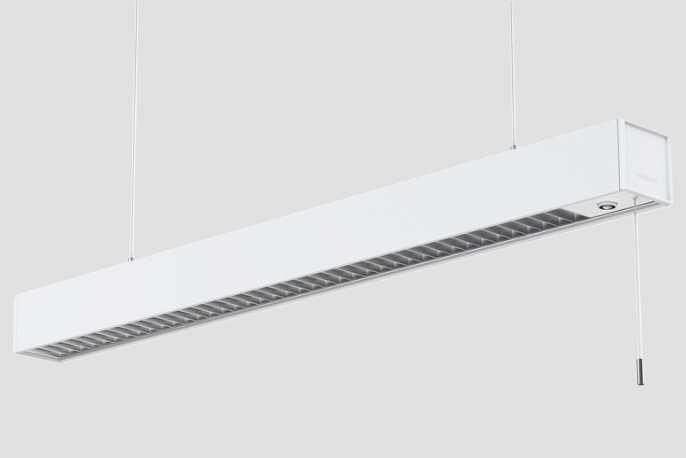
An Unconventional Example of Packaging Innovation
Wrapped is an unconventional example of packaging innovation. By transferring knowledge from packaging materials and fibre-based design into the product itself, Fagerhult has replaced traditional aluminium components with solid board to protect the core of the product.
The result is a commercially viable lighting solution that combines structural performance, safety and aesthetics while reducing reliance on conventional materials. The solution demonstrates how packaging expertise can create new opportunities far beyond the packaging sector and open the door to innovative, more resource-efficient product solutions.
The jury’s statement: An inspiring and innovative example of how high-quality packaging materials can find new life beyond their traditional applications. Eliminating aluminium is impressive and opens up opportunities for broader applications. A well-designed product with a clear level of innovation, although the material’s long-term durability raises some questions.
Company: Smurfit Westrock, Sweden
PFAS-Free Pizza Packaging Made from Bagasse
Blastiq’s round pizza box is a PFAS-free food packaging solution made from bagasse, a renewable plant fibre derived from sugarcane. To provide grease and moisture resistance, the company has developed its own PHA-based barrier coating to replace traditional PFAS solutions. The result is packaging that offers the functionality of a conventional pizza box, but without harmful chemicals or microplastics, while being fully compostable.
The round shape is adapted to the pizza, reducing material consumption and improving transport and storage efficiency. The construction consists of bio-based materials and is designed for easy recycling through paper recycling streams. For consumers, this means the packaging can be sorted as paper packaging after use. The product was developed in response to the EU phase-out of PFAS in food packaging and is already being used by customers in the food industry.
The jury’s statement: An innovative and circular packaging solution that combines smart material choices, functional design and an improved user experience. The product addresses current sustainability challenges and shows strong potential through recyclability, resource efficiency and clear market differentiation.
Company: Blastiq AB
Category: User-Friendly Packaging
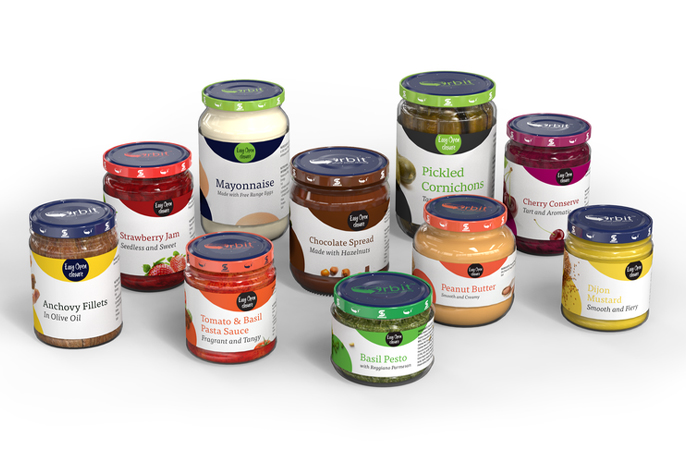
Orbit Lid Makes Something as Everyday as Opening a Glass Jar Easier
Sonoco’s Orbit Lid has been nominated for its distinctly user-centred design, which makes something as everyday as opening a glass jar easier.
The Orbit Lid is recognised for its consistently user-centred design and its ability to improve the functionality of an established packaging format. Through a carefully considered technical construction, it addresses a well-known user challenge associated with opening glass jars.
The lid’s opening and resealing mechanism is designed to minimise the need for force and fine motor control. This results in a more intuitive and predictable user experience while reducing differences in usability between user groups and situations.
The ergonomic design improves accessibility and makes the packaging suitable for a wider range of users, including people with reduced hand strength or limited mobility. In this way, it promotes greater independence in everyday situations.
The Orbit Lid is a clear example of how technical development and functional design can work together to modernise a traditional solution and significantly improve usability without compromising its fundamental function.
The jury’s statement: The Orbit Lid is recognised for its user-centred and carefully considered design, which solves a well-known problem when opening glass jars. The smart construction reduces the need for force and fine motor control, making opening and resealing easier, more intuitive and more accessible to a wider range of users. A strong example of how functional design can improve everyday life.
Company: Sonoco
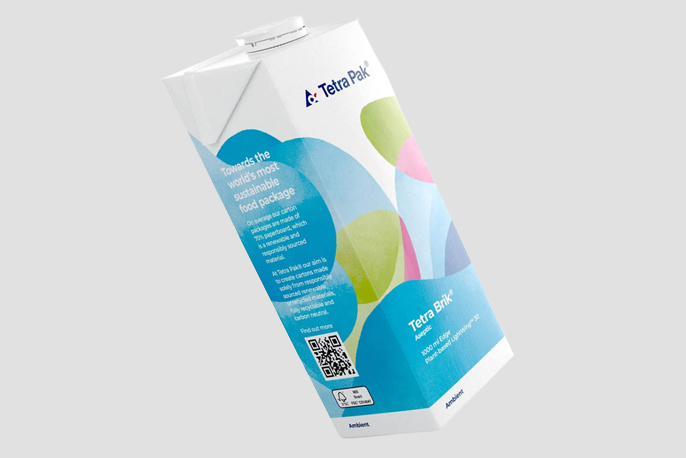
Easy-Opening Solution from Tetra Pak
Lightwing 30, fitted to Tetra Brik 1000 Edge from Tetra Pak, addresses usability challenges associated with traditional screw caps.
The ridged surfaces of screw caps often provide unclear resistance, and when significant force is required, fingers can slip, potentially causing discomfort or pain. The Lightwing 30 snap cap instead provides a more accessible and intuitive opening experience combined with secure resealing, improving usability particularly for people with reduced grip strength.
Lightwing 30 features a generous opening tab that allows for several different grips. The cap can be opened by pushing it up with one or both thumbs, the side of the thumb or other fingers, and can also be operated with one hand. Closing is equally simple. The smooth underside eliminates the risk of misalignment, and only light pressure is required to close the package.
The jury’s statement: A snap cap with a generous opening tab that allows for several different grips. The cap can be opened using one or both thumbs, the side of the thumb or other fingers – and can also be operated with one hand. Closing is equally simple. The smooth underside eliminates the risk of misalignment, and only light pressure is required to close the package.
Company: Tetra Pak
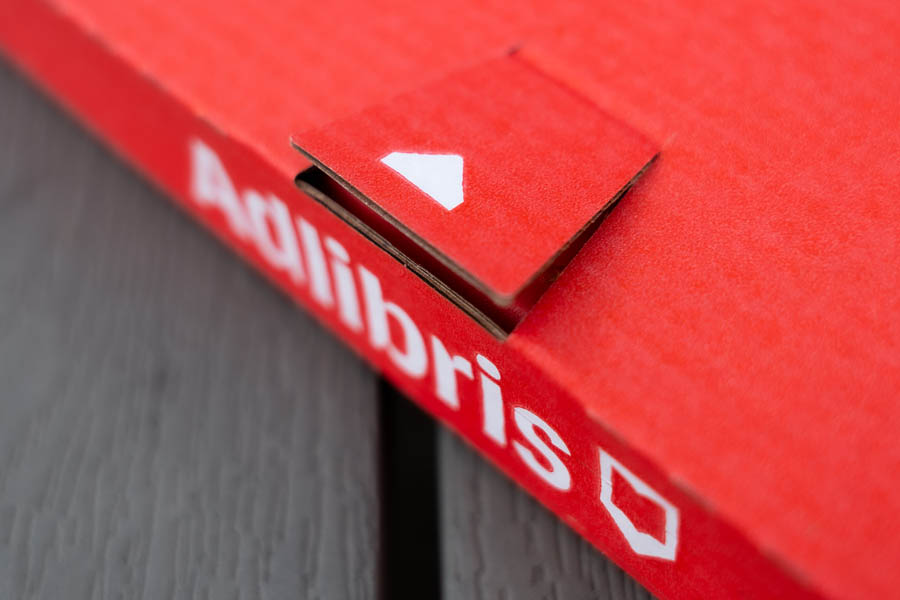
Thoughtful Design for E-commerce Packaging
The e-commerce packaging from Nöjd AB has been nominated for its thoughtful approach to usability. The perforation makes the package easy to open, while the generously sized opening tab provides a good grip and makes it easier to apply force, contributing to an improved user experience.
The packaging has been developed with both usability and sustainability in mind. The smart tear perforation makes it easy to open even for people with reduced hand strength, while the packaging is adapted to the height of the product to minimise unnecessary void fill. Using corrugated material made from 100% recycled raw material further demonstrates that accessibility and sustainability can go hand in hand.
The jury’s statement: Thoughtful design with a clear focus on usability. The perforation makes the packaging easy to open, while the generously sized opening tab provides a good grip and makes it easier to apply force, contributing to a better user experience.
This demonstrates that usability can be just as important a part of an e-commerce package’s functionality. The packaging offers a well-considered user experience that makes it easier for more consumers to handle and open the package.
Company: Nöjd AB
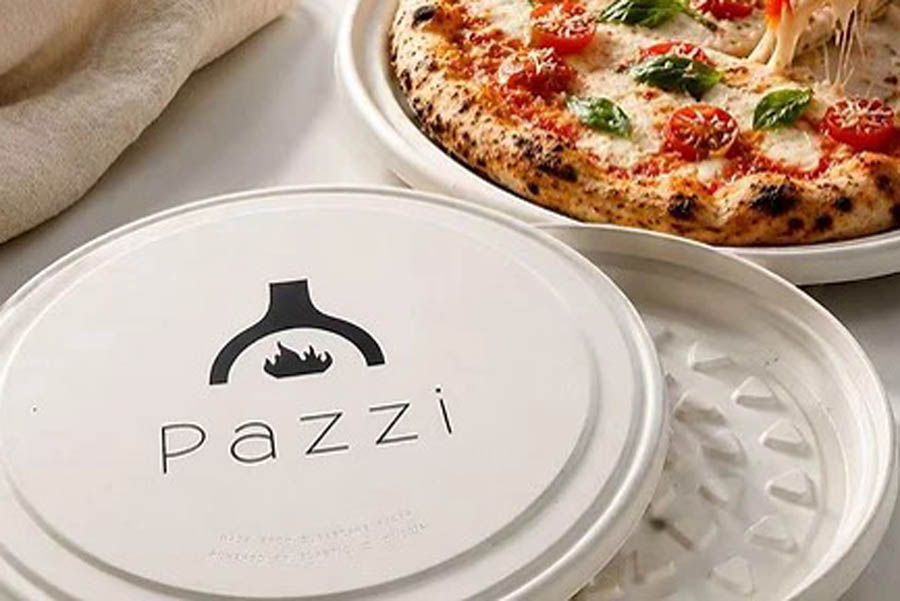
PFAS-Free Pizza Packaging Made from Bagasse
Blastiq’s round pizza box is a PFAS-free food packaging solution made from bagasse, a renewable plant fibre derived from sugarcane. To provide grease and moisture resistance, the company has developed its own PHA-based barrier coating to replace traditional PFAS solutions. The result is packaging that offers the functionality of a conventional pizza box, but without harmful chemicals or microplastics, while being fully compostable.
The round shape is adapted to the pizza, reducing material consumption and improving transport and storage efficiency. The construction consists of bio-based materials and is designed for easy recycling through paper recycling streams. For consumers, this means the packaging can be sorted as paper packaging after use. The product was developed in response to the EU phase-out of PFAS in food packaging and is already being used by customers in the food industry.
The jury’s statement: An innovative and circular packaging solution that combines smart material choices, functional design and an improved user experience. The product addresses current sustainability challenges and shows strong potential through recyclability, resource efficiency and clear market differentiation.
Company: Blastiq AB
Category: Bioplastics
PFAS-Free Pizza Packaging Made from Bagasse
Blastiq’s round pizza box is a PFAS-free food packaging solution made from bagasse, a renewable plant fibre derived from sugarcane. To provide grease and moisture resistance, the company has developed its own PHA-based barrier coating to replace traditional PFAS solutions. The result is packaging that offers the functionality of a conventional pizza box, but without harmful chemicals or microplastics, while being fully compostable.
The round shape is adapted to the pizza, reducing material consumption and improving transport and storage efficiency. The construction consists of bio-based materials and is designed for easy recycling through paper recycling streams. For consumers, this means the packaging can be sorted as paper packaging after use. The product was developed in response to the EU phase-out of PFAS in food packaging and is already being used by customers in the food industry.
The jury’s statement: The Nordic Bioplastics Association has nominated Blastiq’s smart packaging solution because it is based on the renewable fibre bagasse and features a proprietary PHA coating that eliminates PFAS, which are otherwise commonly used in pizza packaging.
The solution addresses several important issues at once: PFAS, material selection, functionality and reduced resource consumption. A clear and highly relevant biomaterial innovation that meets a concrete need in food service.
Company: Blastiq AB
Category: The Future of the Packaging Industry
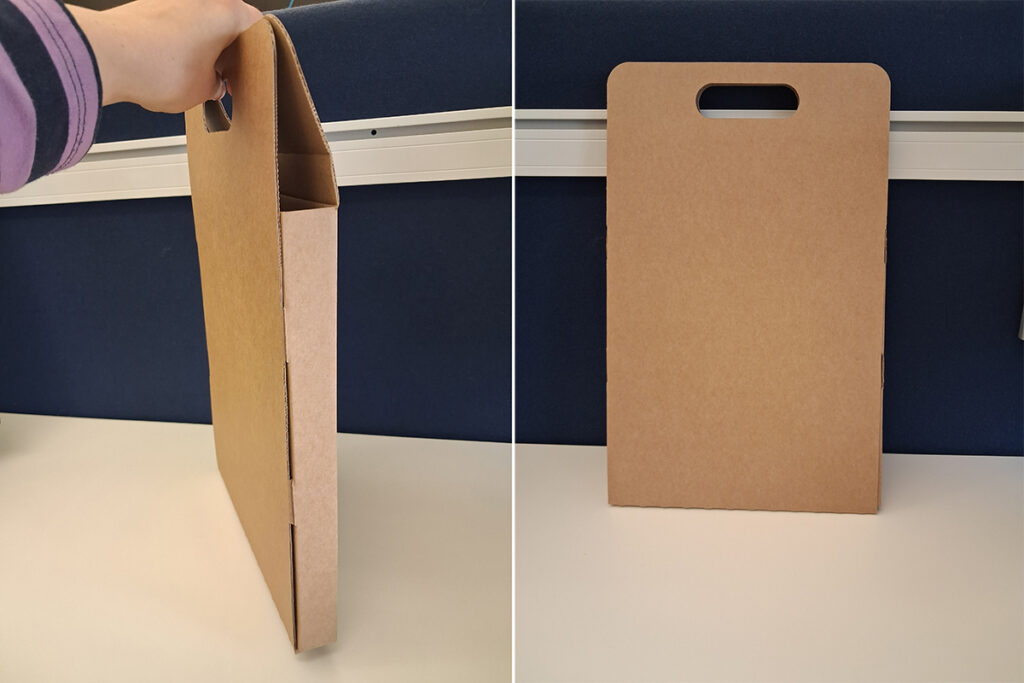
Things in a Box – An E-commerce Solution Combining Three Functions
This packaging is a well-considered and innovative e-commerce solution that combines three functions in a single construction. By replacing several separate packaging types, it simplifies logistics, reduces supply-chain complexity and creates added value for both businesses and consumers. It is designed to meet PPWR requirements and sized to fit parcel lockers and mailboxes, making it well suited to modern delivery flows.
Made from corrugated board with a high proportion of recycled material, the packaging combines sustainability with functionality. A smaller proportion of virgin fibre provides the strength and stability required to protect the contents during transport. The construction is also designed to be easily folded flat after use, facilitating recycling and reducing waste volume.
By combining flexibility, resource efficiency and user-friendliness, the solution demonstrates how smart packaging design can contribute to reduced material use and more efficient e-commerce. It is a strong example of how sustainability, logistics and customer value can be integrated into a single packaging solution.
The jury’s statement: A smart and innovative packaging solution with significant potential for both reuse and protection of sensitive products. By combining several functions in an elegant concept, the entry demonstrates forward-thinking and a strong understanding of resource-efficient design.
Student project submitted by: Sofie Josefsson, Haganässkolan, Älmhult
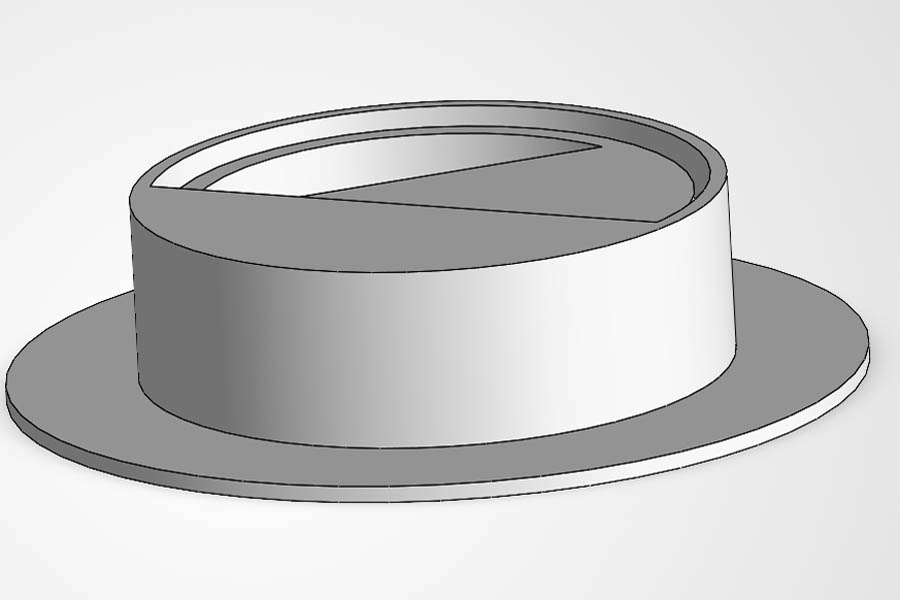
Innovative Closure Solution Addresses Multiple Challenges
EaseCap is an innovative cap concept that addresses several of the challenges associated with today’s tethered caps. Its rotating screw cap with an integrated stopper allows users to control the opening and adjust the flow from a small to a larger opening. This reduces the risk of spills, improves pouring and ensures that the cap does not get in the way during use.
The solution has been developed with a particular focus on accessibility and ease of use. The simple twisting mechanism requires minimal force and fine motor control, making it well suited to people with reduced hand function, including people with rheumatic conditions. The ability to operate the cap with one hand further improves the user experience.
The cap is designed as a monomaterial solution, simplifying recycling and enabling full material recovery without the need for material separation. It can easily be separated from the carton package and fits existing recycling systems. The prototype is made from PET using 3D printing to enable rapid development and testing, but the concept has strong potential to be manufactured from recycled material such as rPET in the future without compromising food safety or functionality.
EaseCap is a strong example of how user-centred design can improve functionality, accessibility and sustainability in future packaging solutions.
The jury’s statement: An innovative and resource-efficient solution with inclusive design at its core. By improving usability, control and accessibility, the concept shows strong potential to make packaging easier to use for a wider range of people. A promising entry with a clear focus on the needs of the future.
Student project submitted by: Sandra Ilic, Haganässkolan, Älmhult
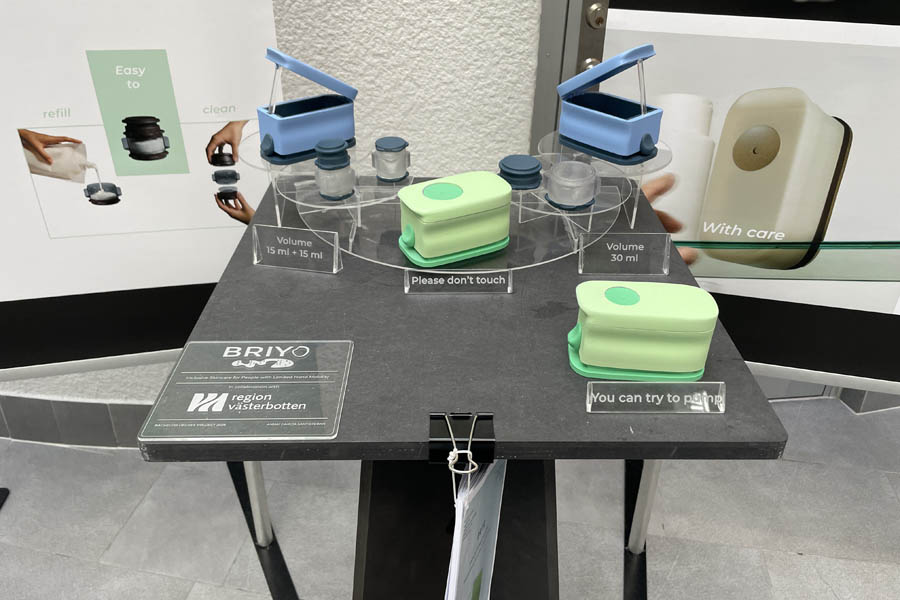
Skincare Concept Designed for People with Reduced Hand Function
BRIYO is an innovative, user-centred skincare packaging concept developed for people with reduced hand mobility. By combining one-handed operation, ergonomic design and controlled dispensing, the packaging enables users to manage their skincare independently. The airless pump system requires little force while ensuring that up to 99% of the contents can be used, reducing product waste.
The design is based on extensive user studies and dialogue with occupational therapists. Large, easy-to-grip surfaces, high stability and the ability to use different parts of the hand create good accessibility. At the same time, the product has a modern and attractive appearance inspired by commercial skincare products, helping to reduce the stigma often associated with assistive products.
BRIYO has also been developed with circular design principles at its core. The packaging is refillable and designed for disassembly, repair and material recycling. Snap-fit connections and replaceable components allow worn parts to be replaced without discarding the entire product, extending its lifespan and reducing resource consumption. The construction also facilitates material separation at the end of its useful life.
Although the concept is still at the development stage, BRIYO demonstrates how accessibility, sustainability and functionality can be combined in a single solution. With refill functionality, reduced product waste and a long lifespan, the concept provides a strong example of how inclusive design can create both greater independence and significant environmental benefits.
The jury’s statement: A smart and forward-looking refill solution that combines several functions within the same package. The flexible, universally designed construction makes handling viscous liquids simple and user-friendly. An innovative concept with strong potential for the sustainable packaging solutions of the future.
Student project submitted by: Annaí García Santisteban, Umeå Institute of Design
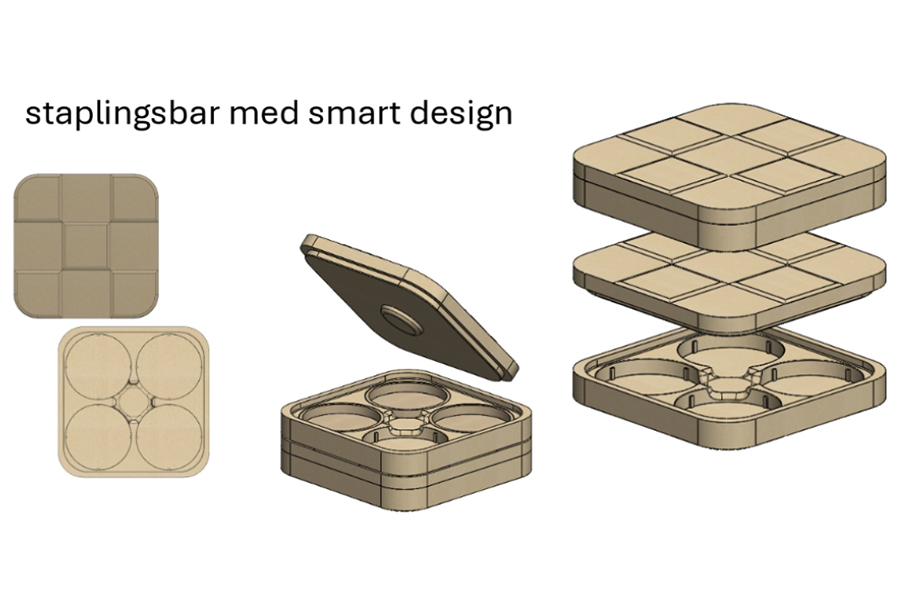
Refillable Makeup Palette Combines Functionality, Sustainability and Fibre
Fiblett is an innovative concept for a refillable makeup palette that combines functionality, sustainability and fibre-based design. The palette holds four individually replaceable pans that are easily attached using an integrated click mechanism. When a product is used up, only the relevant refill needs to be replaced while the palette itself is retained and reused. This reduces material consumption and allows consumers to customise the contents according to their individual needs.
The construction features a lid that protects and holds the products securely in place, as well as a stackable design that makes multiple palettes easy to combine and store. By replacing traditional plastic and metal makeup palettes with a fibre-based solution, Fiblett offers a more sustainable alternative without compromising functionality.
The concept is based on a monomaterial approach in which both the palette and refill inserts are intended to be made from fibre-based material. Integrated features such as the click mechanism eliminate the need for separate plastic or metal components and simplify recycling. The goal is a package made from as few material types and requiring as few separation steps as possible, making it easy for consumers to handle after use.
Although the concept is still at the prototype stage, the ambition is to enable a high proportion of recycled fibre. The greatest sustainability benefit, however, lies in the reusable palette, where only the refill inserts need to be replaced. Fiblett demonstrates in an innovative way how circular design and material development can reduce resource consumption and replace traditional multi-component solutions in cosmetic packaging.
The jury’s statement: Fiblett combines attractive design, good functionality and sustainability in a well-developed fibre-based solution. The refill concept reduces waste and encourages reuse through separate, replaceable containers. A strong example of how accessibility and circular thinking can be combined with attractive design.
Student project submitted by: Sandra Ilic, Haganässkolan, Älmhult